Local News
LAHC Opens Major Behavioral Health and Workforce Hub in Dearborn — What It Means for Residents
By Staff · July 17, 2026
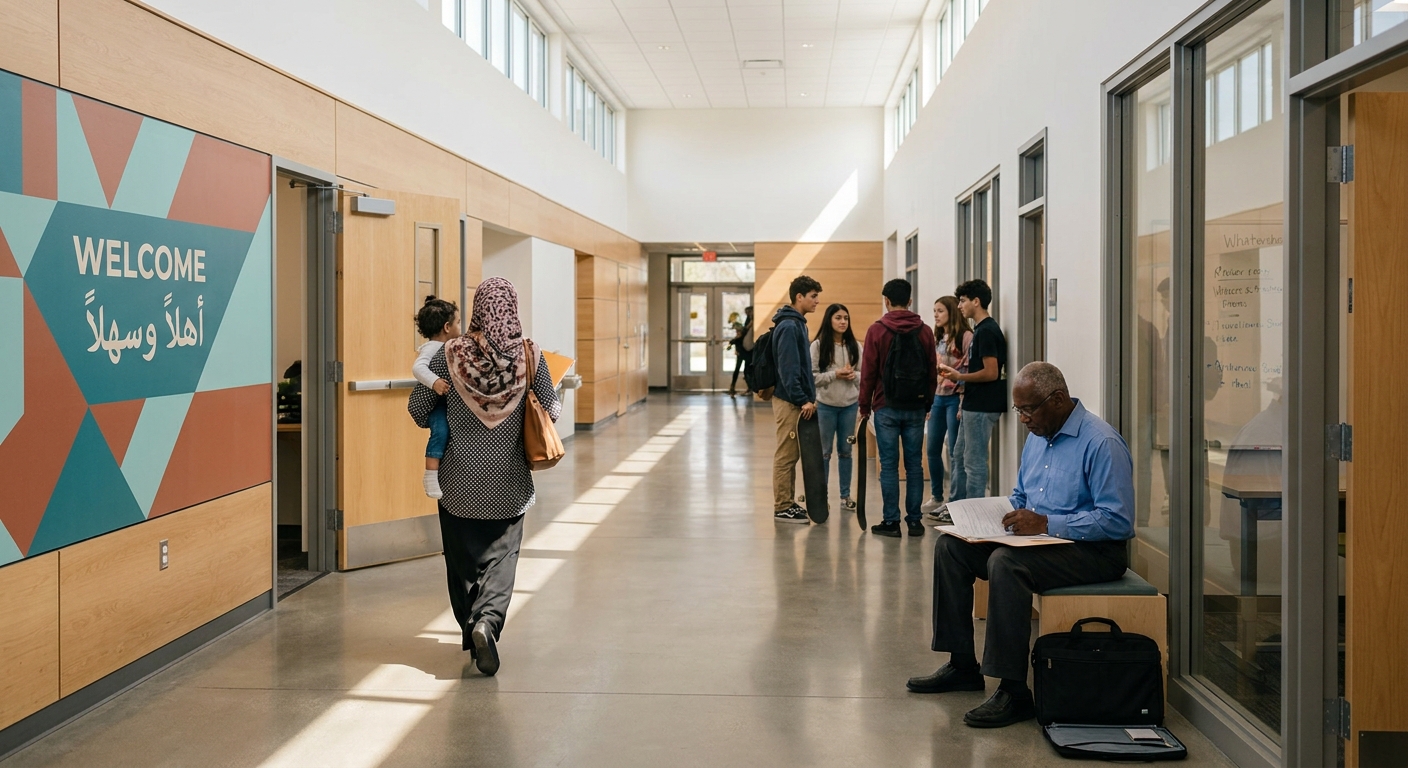
At LAHC's Dearborn headquarters, residents can now seek behavioral health care, job support and practical skills training under one roof rather than navigating multiple agencies for connected needs.
Leaders Advancing and Helping Communities opened the 6,500-square-foot extension to its Dearborn headquarters on May 14, 2026. The new wing houses expanded behavioral health services, digital learning, financial literacy, software skills and leadership development programming. For a family dealing with anxiety or depression while also facing unemployment, housing instability or limited English proficiency, the goal is to make support easier to reach without being sent from office to office.
The expansion is funded by several million dollars in grants, including a $6.5 million state appropriation from the Michigan Senate for LAHC's Public, Mental, and Behavioral Health Department — $2 million from the 2026 Supplemental budget and $4.5 million in the FY 2027 appropriation. The appropriation is a Legislatively Directed Spending Item requested by Senator Sylvia A. Santana to strengthen evidence-based behavioral health programs, substance use prevention and culturally responsive mental health services for children, adolescents and families. LAHC also received a $1.5 million grant from the Michigan Central Station Fund, which requires raising $200,000 in matching donations and supports the new Workforce Development Center.
"This hub represents years of planning, partnership, and belief in what our community can achieve together," Wassim Mahfouz, President and CEO of Leaders Advancing and Helping Communities, said. "This investment will allow us to deepen our impact, strengthen our services, and expand opportunities for thousands of families across our region."
LAHC's behavioral health services include therapeutic mental health services for conditions including depression, anxiety, suicidal ideation, autism and developmental disabilities, using evidence-based and culturally responsive approaches. Substance use disorder prevention programs use curricula including Life Skills and Nurturing Parenting, with youth groups and culturally-specific programming. The state funding supports specialized programs including PATHWAYS and Blooming Minds for at-risk youth, including teens with autism, developmental disabilities, depression, anxiety, suicidal ideation and eating disorders. LAHC also offers recreational therapy including art, music, drumming, movement, mindfulness, martial arts and sports to support stress relief and calming strategies.
The Workforce Development Center provides personalized coaching with Career Navigators and Career Coaches, employability skills workshops, resume development and job fair access. It also offers digital literacy classes, financial literacy education, ESL classes in partnership with Dearborn Public Schools and tailored for English learners, housing assistance, employer and job referrals, and access to funded training and educational programs.
The extension is physically connected to existing spaces, eliminating the need for clients to travel between separate agencies. LAHC's integrated model addresses the whole person by ensuring that behavioral health professionals engage with clients' broader life challenges — including unemployment and housing instability — rather than treating symptoms in isolation. All services are provided at zero cost, sustained entirely by grants and donations.
"We have our infant and maternal health program working with expectant mothers all the way to senior citizens," Wassim Mahfouz, President and CEO of Leaders Advancing and Helping Communities, said.
LAHC serves approximately 56,000 individuals annually in Metro Detroit and 80,497 across Southeast Michigan in 2025. In 2023, LAHC served 22,882 individuals in its Behavioral Health programs. The new facilities aim to serve an additional 20,000 to 30,000 individuals annually, expanding access to career pathways and holistic support.
LAHC's 2023 client demographics were 42% Arab American, 39% African American, 12% Hispanic and 7% Caucasian. Sixty percent of clients were female, 40% male, and 85% had household incomes under $29,999.
Dearborn has an estimated population of 106,000 residents as of 2024. In Dearborn, 29.4% of residents are foreign-born and 51.4% speak a language other than English at home, according to 2024 estimates. LAHC employs bilingual staff proficient in English, Arabic and French who provide real-time program translation. LAHC also provides Arabic interpretation services and offers fee-based document translation with a sliding scale for low-income households, covering birth certificates, diplomas, medical reports and other documents.
Beyond its headquarters, LAHC creates mental health hubs in neighborhood pockets where access is limited by partnering with local school districts, faith-based organizations, parks, federally qualified health centers and libraries. The hubs are overseen by trained mental health professionals but are youth-led, employing a peer-to-peer mentor model to drive community activities.
LAHC is open to everyone regardless of age, background or religion. The center is located at 5275 Kenilworth Street in Dearborn, Michigan 48126, and operates Monday through Friday from 9:00 AM to 5:00 PM. Appointments are required for many services including the food pantry; clients should call (313) 254-2640 for food-related appointments or (888) 315-5242 or (313) 254-2660 for general inquiries. For information on language services or ESL classes, residents can call 313-846-8480.