Local News
Hazardous Air Quality Forces Dearborn to Cancel and Reschedule Multiple Downtown Summer Events to Late August
By Staff · July 22, 2026
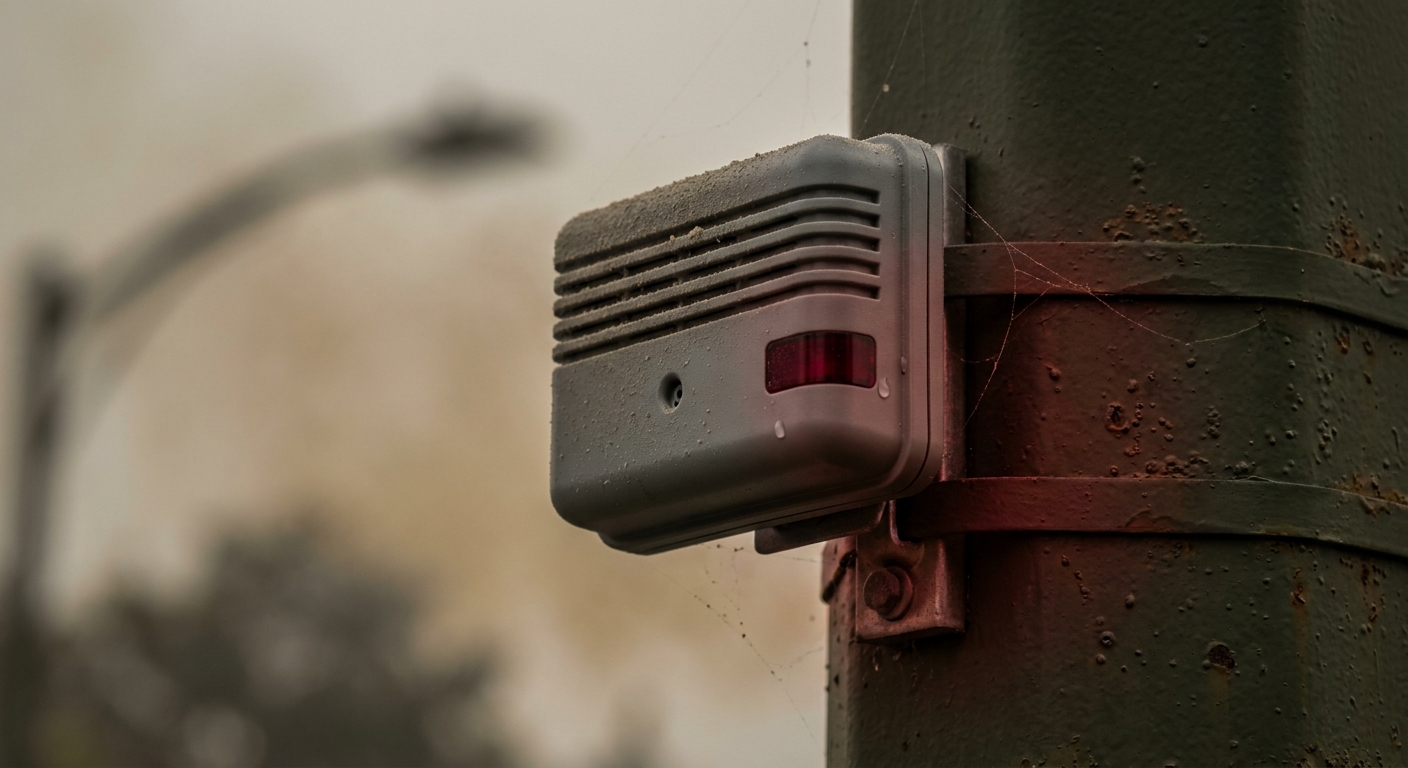
Hazardous air on two consecutive July days cleared downtown Dearborn's summer calendar, forcing the Summer Market and Jazz Under the Stars off their planned dates and onto the same night in late August.
The City of Dearborn canceled the Downtown Dearborn Summer Market, scheduled for July 17, 2026, because of hazardous air quality conditions and rescheduled it to Friday, Aug. 28, 2026. Jazz Under the Stars, featuring Mahogany Collective and the Hayden Cusmano Quartet, was postponed from July 16 and rescheduled to the same night at 8 p.m. Both events will take place at Peace Park West, 22271 Village Dr., in downtown Dearborn.
The cancellations were part of a broader public-health response. On July 17, after air quality reached the hazardous level for a second consecutive day, the city closed Camp Dearborn and all city pools, including the indoor pool. Dearborn Public Schools announced that all school activities would be closed on July 17, 2026.
The immediate source was wildfire smoke, not a newly identified local pollution event. Smoke from Canadian wildfires caused hazardous air quality across metro Detroit and Dearborn in mid-July 2026. Michigan's Department of Environment, Great Lakes, and Energy upgraded the air quality status for the entire state to Hazardous on July 16, 2026, due to elevated fine particulate matter — PM2.5 — from wildfire smoke. EGLE had issued a statewide air quality alert beginning July 14, warning the event could last multiple days as winds carried smoke into Michigan.
The readings made clear this was not ordinary summer haze. Detroit's Air Quality Index hit 650 at an EPA monitor and as high as 874 at a private monitor — the worst levels since local air quality monitoring began in 1999. EGLE's statewide forecast predicted PM2.5 levels reaching Hazardous, or AQI Maroon, in the Upper Peninsula and Very Unhealthy, or AQI Purple, across the Lower Peninsula on July 17, with conditions expected to improve slightly by July 18.
For Dearborn residents, the question goes beyond why two events were called off. It is how families, workers, and older residents can get timely, credible warnings before smoke or other pollution turns an ordinary day outdoors into a health risk.
EGLE operates Michigan's state ambient air monitoring network, including the Dearborn regulatory monitoring site, with EPA providing oversight under federal air-monitoring requirements. Separately, Dearborn operates a community air quality monitoring program in partnership with JustAir, a Detroit-based startup, which provides real-time neighborhood data through 11 monitors across the city. The program launched in 2024 as a MiNextCities-supported pilot with 10 monitors and expanded in 2025 to 11 under city funding. The monitors measure particulate matter, nitrogen dioxide, ozone, carbon monoxide, and PM10, with data available in English and Arabic on a public dashboard. In 2024, the program collected over 1 million air quality measurements, issued more than 41,500 text alerts, and had more than 200 subscribers.
Residents can receive warnings through EGLE's EnviroFlash system, which sends email or text notifications when pollution levels may be harmful, or opt into JustAir text alerts that notify them when air quality reaches levels of concern and again when conditions improve. Real-time data is also available on Michigan EGLE's MiAir hub and third-party services such as IQAir and AQICN.
During the July episode, the city advised residents to stay indoors, use air conditioning, avoid strenuous outdoor activity, and watch for respiratory and eye irritation symptoms. EGLE urged residents to stay inside with windows closed, use air conditioning or seek cooling centers via 211, and contact local health departments for shelter and safety resources. Health experts recommended N95 masks outside, running HVAC systems on recirculate, and constructing DIY box-fan air filters to reduce indoor pollution.
The consequences are most serious for people who cannot simply treat a hazardous-air day as an inconvenience. PM2.5 pollution can worsen asthma, reduce lung function, and increase respiratory illness risk in children and older adults, with children and people with heart or lung disease among the most sensitive groups. In children, air pollution is linked to reduced lung growth, respiratory infections, and increased asthma hospitalizations during short-term pollution spikes.
Dearborn's own data show that air quality challenges are not confined to an extraordinary week of wildfire smoke. The city's Department of Public Health released a 2025 air quality report showing an average AQI of 44, with 57% moderate days, 41% good days, and 2% Unhealthy for Sensitive Groups days. The report noted that pollution was worst on June 6, 2025, due to Canadian wildfires, that summer months showed higher pollution, and that monitoring sites like Levagood Park and Eugene & Porath differed in the share of good air quality days, underscoring neighborhood-level variations.
"Dearborn families have suffered from poor air quality for decades," Abdullah Hammoud, mayor of Dearborn, said.
The city's JustAir program and public reporting give residents neighborhood-level data and alert tools that complement state and federal monitoring. But July's cancellations put the practical question in front of the city and its residents: monitoring and alerts protect people only if they reach them soon enough to safeguard children, older relatives, and workers whose lives do not pause when the air turns dangerous.
Both rescheduled events are set for Friday, Aug. 28, 2026, at Peace Park West. Residents can sign up for air quality text alerts through Dearborn's JustAir system and EGLE's EnviroFlash to receive advance warning of future pollution episodes. The 2025 air quality report's finding that wildfire smoke had already affected Dearborn in June 2025 — and that summer months consistently show higher pollution — suggests future episodes remain a risk worth monitoring.