Local News
Dearborn Secures $8.1 Million FEMA Grant for East Dearborn Flood Infrastructure
By Staff · July 19, 2026
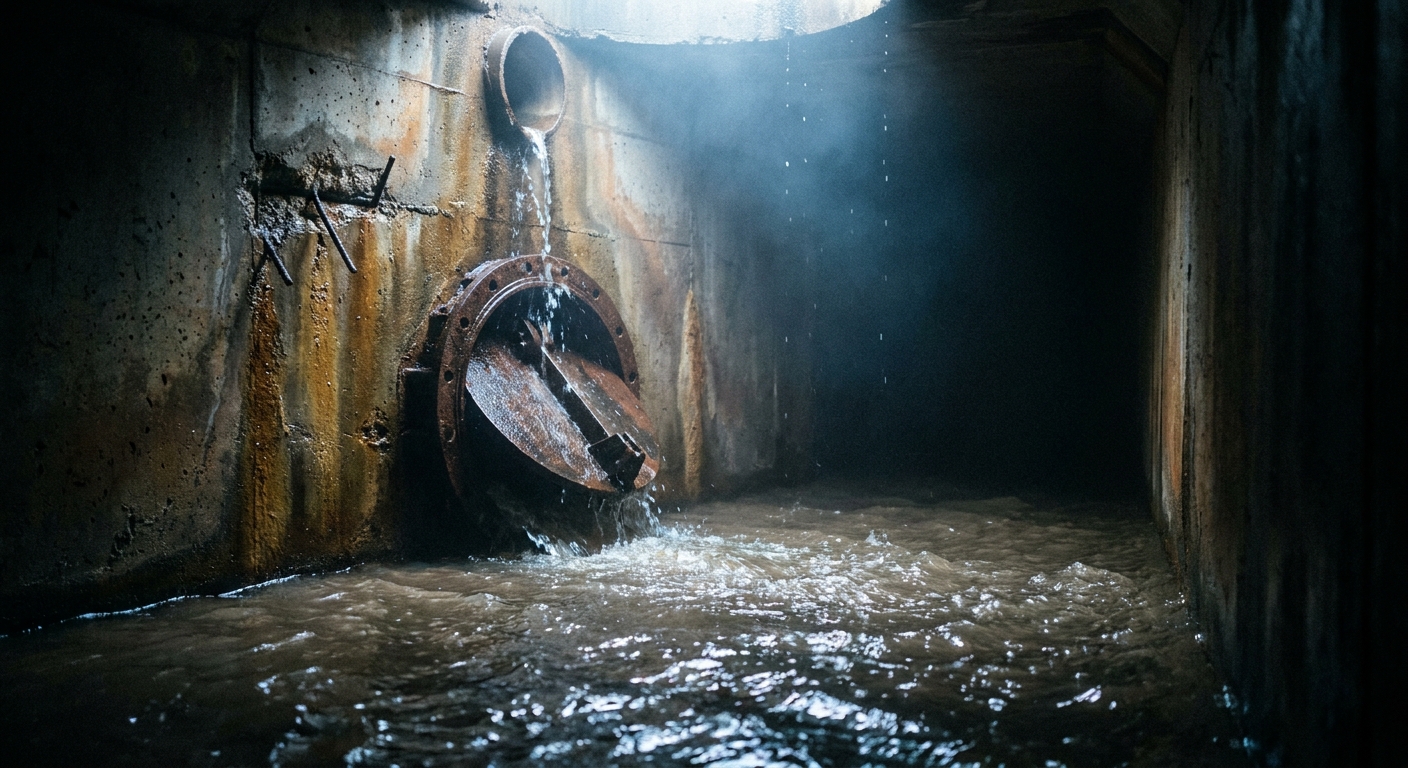
More than 13,600 residents in east Dearborn's sewer district are at the center of an $8.1 million FEMA award aimed at reducing the flooding and basement backups that have repeatedly damaged homes there. The City of Dearborn has been approved for more than $8.1 million from FEMA's Hazard Mitigation Grant Program for flood mitigation projects in east Dearborn neighborhoods between Chase Road and Greenfield Avenue.
That means the grant cannot be shifted to community programs, economic development or unrelated road work elsewhere in the city. It is tied to a specific flood-protection project.
For residents in the project area, the question is more immediate: Will a long-promised investment finally protect homes in neighborhoods repeatedly hit by flooding?
The $8.1 million grant represents the second phase of a total $8.4 million flood mitigation effort. FEMA will fund 90 percent of the project costs, with the city covering the remaining 10 percent through its budget. FEMA is also providing over $149,000 to assist in managing the second phase of the grant program.
The project will install approximately 6,200 feet of new storm sewers and specialized structures designed to move stormwater away from homes during heavy rainfall, including grade protection and flap gate structures that act as backflow preventers to handle high-flow scenarios and prevent basement backups.
The East Dearborn sewer district serving neighborhoods roughly bounded by Michigan Avenue, Greenfield Avenue, Warren Avenue and Chase Road protects approximately 13,600 residents.
For taxpayers outside that district, the grant puts a familiar question back on the table: Which neighborhoods get scarce drainage dollars first, and who pays for the work federal funding does not cover?
The targeted neighborhoods have experienced repetitive flooding in 2014, 2018 and 2021, including a 1,000-year rainfall event in 2021 that affected two-thirds of homes in the city.
"We are grateful for this FEMA grant, which will allow us to take appropriate actions to protect our neighborhoods," Abdullah H. Hammoud, Mayor of Dearborn, said. "These funds will help us conduct major flood projects in a particularly hard-hit area, thereby boosting our overall stormwater capacity across the city."
Still, the east Dearborn project addresses only part of the city's drainage problem. Completing the necessary large-scale infrastructure investments to fully meet extreme weather capacity citywide will require approximately $700 million over the next 15 to 20 years, and the city has identified a Southwest Dearborn project covering 800 acres as another infrastructure priority.
So the accountability question is not whether officials can redirect this particular $8.1 million. They cannot. The larger test is whether city leaders can win — and fairly direct — the far greater funding still needed across Dearborn.
The project is currently in the design phase, with construction expected to be completed in 2027. By then, residents will have a clear measure of the investment: whether it stayed within Dearborn's required local contribution and reduced the flooding and basement backups it was built to prevent.
The Herald-Press will track contractor selection, construction progress through the anticipated 2027 completion date, and whether the new storm sewers and backflow preventers protect homes in the next major rainfall event. The Herald-Press will also monitor how the city pursues additional federal and state funding to close the $700 million citywide stormwater infrastructure gap and which neighborhoods are prioritized in future grant applications and capital budget decisions.