Government
League of Women Voters Spotlights Public Access to Dearborn Election Proceedings — Is Civic Oversight Keeping Pace?
By Staff · July 21, 2026
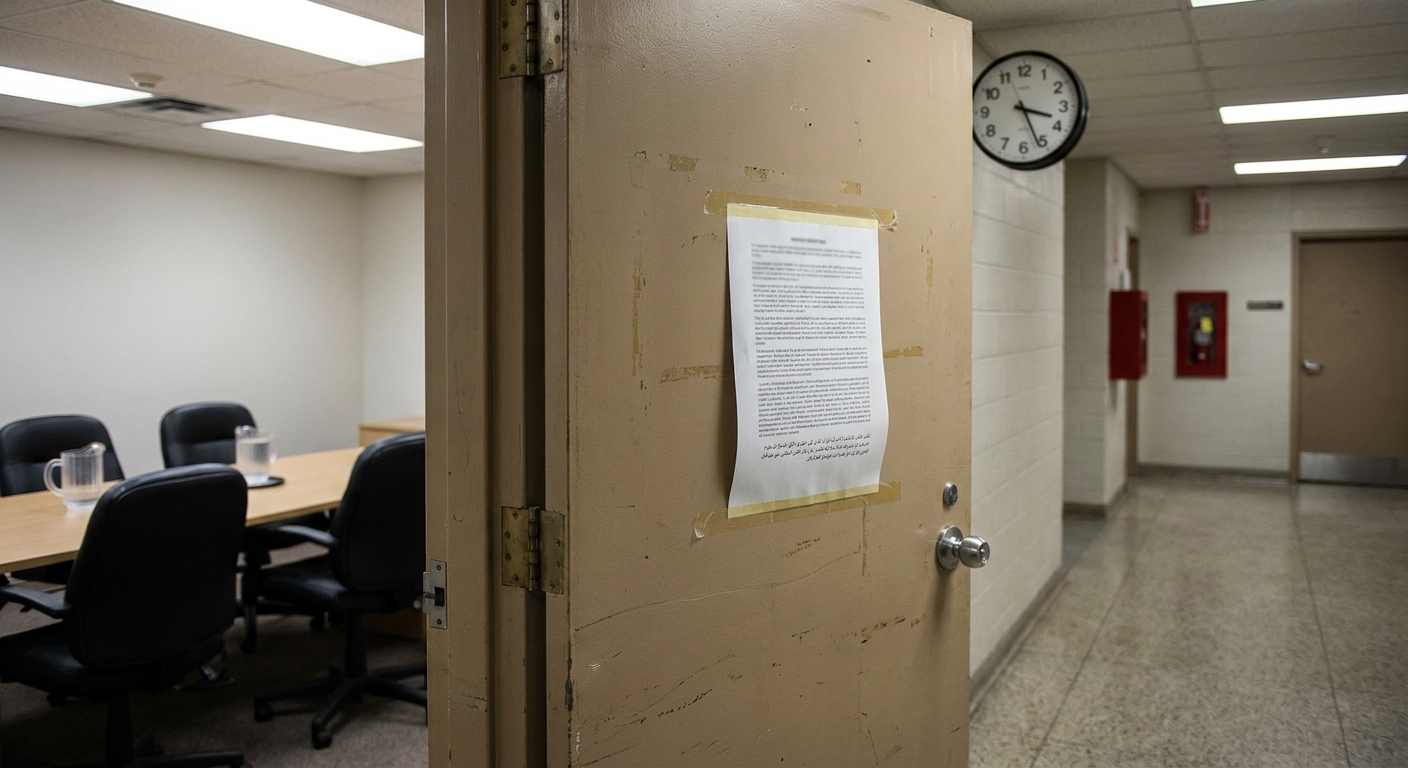
For a Dearborn resident working a Tuesday afternoon shift, the chance to watch local election decisions unfold came and went at 3:45 p.m. July 14 — in Conference Room 1-D at the Dearborn Administrative Center, 16901 Michigan Ave.
The meeting was public, but the League of Women Voters Dearborn-Dearborn Heights was the group helping make sure residents knew about it, publicizing the July 14 session as an event open to all Dearborn residents. That contrast raises a basic question: When a public meeting is scheduled during most people's workday, and a volunteer civic group carries much of the outreach, is public access designed for actual participation or simply legal compliance?
For residents juggling work, school pickup, family care or transportation, the issue is not whether they were technically allowed in the room. It is whether they had a realistic chance to be there. Dearborn's population is estimated to be between 104,725 and 105,611 as of 2026. The Election Commission meets as necessary rather than on a fixed recurring schedule, meaning meetings are arranged around city administrative hours rather than residents' availability.
The League of Women Voters Dearborn-Dearborn Heights is a local chapter of the nonpartisan civic organization whose mission is to empower voters and defend democracy through civic engagement, voter registration and education, and advocacy for public access to government. The League advocates for an open governmental system that protects citizens' right to know, including adequate notice of proposed actions, open meetings and accessible public records. The League never supports or opposes specific political parties or candidates but actively encourages its members to participate fully in the political process as individuals. Its public promotion of the July 14 meeting demonstrates volunteer civic groups doing the work of informing residents that city government should be leading.
The Dearborn Election Commission oversees local election administration, establishing absent voter counting boards, appointing their members, authorizing ballot printing and conducting logic and accuracy testing for voting equipment prior to each election. Election inspectors in Dearborn must be at least 16 years old and, if 18 or older, must be registered Michigan voters with no felony or election crime convictions. The commission's authority over poll worker appointments, ballot language and voting equipment testing means public oversight of these meetings is public oversight of the election process itself.
None of that is routine paperwork. These are the decisions behind the people staffing polling places, the ballots voters receive and the equipment used to count votes. Residents who want to trust those decisions should have a meaningful way to watch them being made — without having to choose between civic oversight and a paycheck.
That is where the League of Women Voters Dearborn-Dearborn Heights stepped in. But the civic group's work also raises an uncomfortable question: Why does a volunteer organization have to do so much of the work of telling residents when they can watch their election system operate?
Dearborn is a diverse, multicultural city with a large Arab American population and multilingual communities. Starting with the Aug. 2, 2022, primary election, the city officially provided Arabic-language translations for all election materials, including ballots, sample ballots, polling location signs and informational brochures. Yet the city's public meeting outreach does not reflect the same level of culturally responsive engagement. In a working-class city where many families navigate language barriers and economic pressures, scheduling public meetings during work hours and relying on English-language civic organizations to promote them widens rather than narrows the civic participation gap.
Michigan's Open Meetings Act requires public bodies to post notice of regular meetings within 10 days after the first meeting of the calendar or fiscal year, stating dates, times and places for the year. Special or rescheduled meetings must be posted at least 18 hours in advance. All meetings must be open to the public and held in a place available to the general public. Individuals with disabilities requiring accommodations for Election Commission meetings can contact the City Clerk at 313-943-2010 or TDD 313-943-2974 with reasonable advance notice.
Dearborn's meeting notices comply with Michigan's legal requirements, but legal compliance is not the same as meaningful accessibility. The city provides disability accommodations and meets statutory notice deadlines, yet the structural barriers of weekday afternoon scheduling and limited proactive outreach remain unaddressed.
Dearborn residents can ask their City Clerk and City Council whether Election Commission meetings can be scheduled outside standard work hours, whether the city will commit to proactive multilingual outreach rather than relying on volunteer organizations, and whether boards and commissions with election oversight responsibilities will adopt evening or weekend times that signal a commitment to genuine public participation.
An evening or weekend meeting would not guarantee a crowded room. But in a city that has taken real steps to provide multilingual election materials, the challenge now is whether that same commitment will extend to ensuring residents can participate in the meetings that shape elections in the first place.
Until then, a meeting can be legally public while remaining practically out of reach for many of the people whose elections it governs.